


2026 Chelsea MA Heat Pump Rebates Overview and Updates | Rebates & Tax Credits | Chelsea, MA
2026 Chelsea MA heat pump rebates offer valuable savings for homeowners upgrading to energy-efficient systems, but updated rules and reduced amounts mean acting quickly is more important than ever. With a $1,500 drop from 2025 levels and new requirements around refrigerant type, Chelsea residents must understand the latest rebate updates to maximize their benefits before incentives decline further.
2026 Chelsea MA Heat Pump Rebates Overview and Updates
If you're a homeowner in Chelsea, MA, 2026 has brought some important changes in how you can save on energy-efficient home upgrades — especially when it comes to heat pump installations. At SumZero Energy Systems, we understand that managing heating costs and adapting to state and federal incentives can be confusing, especially with rebate programs evolving each year. This guide breaks down everything Chelsea homeowners need to know about current Mass Save® rebates, federal incentives that are no longer available, and what steps you can take to lock in maximum savings before further reductions set in.
With our historical winters, aging housing stock, and increasing utility rates, Chelsea residents have much to gain from electrification and heat pump upgrades. This page is your complete and updated hub on 2026 rebate changes, how to qualify under the latest Mass Save® standards, and what you need to act on now to ensure your system pays off over time.
“In Chelsea, our winters still demand a reliable heating system, and despite changes to rebates, heat pumps remain one of the smartest investments for year-round efficiency and comfort.”
What's New in 2026 for Chelsea Heat Pump Rebates?
Homeowners should act fast—2026 has brought a series of rebate reductions and qualification changes that make early action more important than ever.
Rebates Decreased by $1,500 Compared to 2025
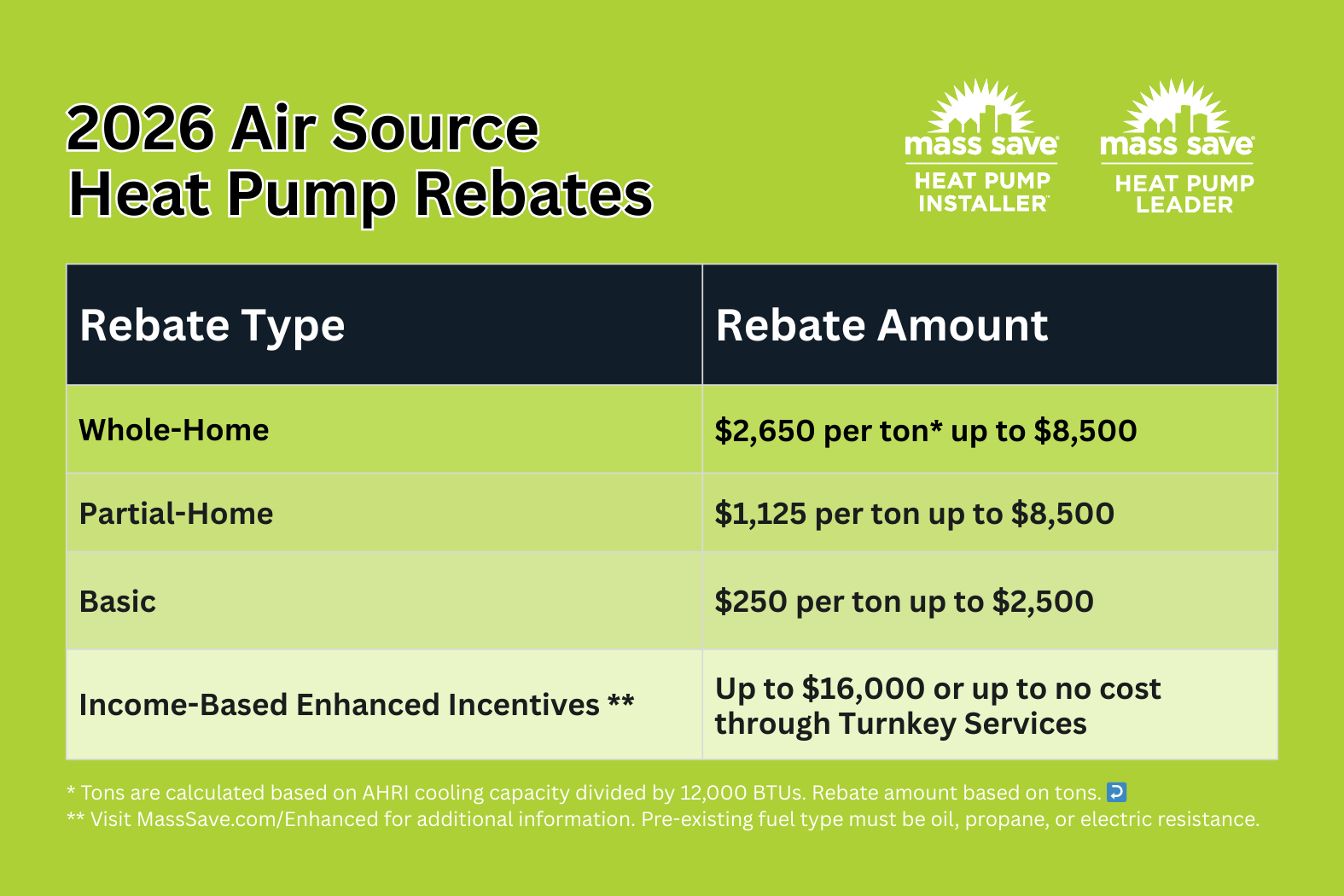
Mass Save® has confirmed that their 2026 rebate structure now offers $1,500 less for qualifying heat pump installations compared to 2025. This marks a continuing trend of gradual reductions.
- Average whole-home air-source heat pump rebate now sits around $8,500—down from $10,000 in 2025
- Partial-home installations and mini-splits may see even smaller rebates depending on home size and heating load
If you’ve been holding off, it’s worth noting that these incentives aren’t being expanded—they’re decreasing steadily as the state nears its clean energy goals.
R-410A Systems No Longer Qualify
One of the most significant updates for 2026 is that systems using R-410A refrigerants are no longer eligible for any Mass Save® rebates. Instead, homeowners must install heat pumps that use low-GWP (Global Warming Potential) approved refrigerants, such as R-454B or R-32, in order to qualify.
- R-410A is being phased out due to its environmental impact
- New qualifying systems must now meet stricter refrigerant criteria
- Always confirm with your installer that your chosen system uses compliant refrigerant
“Only heat pumps with low-GWP refrigerants qualify in 2026. If you’re replacing or upgrading your system, make sure it’s certified by Mass Save®—older models no longer cut it.”
Qualification Criteria for 2026 Mass Save® Rebates
Understanding the new rules is key to claiming cash incentives before they disappear or tighten even more.
Energy Efficiency and Whole-Home Design Remain Crucial
Mass Save® continues to prioritize whole-home solutions that minimize fossil fuel dependence. For the best options and rebates, systems must meet strict SEER2 and HSPF rating thresholds.
- Whole-home systems must be able to handle 100% of heating and cooling load
- Minimum efficiency standards: SEER2 rating of 16+ and HSPF2 rating of 8.1+
- Partial installations (e.g., mini-splits in one or two rooms) receive smaller rebate amounts
Low-Income Programs Still Offer Greater Support
If you qualify under Mass Save®'s income-based eligibility guidelines, you may still receive no-cost or deep-discount systems. These programs are limited and often processed through verification agencies for Chelsea households.
- Additional help may be available through local non-profits and community development grants
- Must apply early as low-income program slots fill quickly
You can check eligibility through Mass Save’s official site.
Get to Know the Utility Provider Low-Income and Winter Rate Programs
In addition to Mass Save®, local utility companies such as Eversource and National Grid offer seasonal rate programs that can relieve pressure during Chelsea’s coldest months.
Eversource Winter Reduced Rate Program
Eligible Chelsea households can apply for Eversource’s low-income discount rate, which provides:
- 25%–35% reductions on electric and gas bills from November through April
- Annual re-enrollment required, with income documentation
- Can be combined with heat pump rebates
If you recently installed a heat pump but feel your bills are still high, signing up for this rate program can deliver meaningful relief.
National Grid Winter Assistance and Billing Options
Chelsea residents served by National Grid have access to optional billing programs and debt forgiveness options:
- Budget billing helps normalize high winter bills
- Arrearage Management Program (AMP) eliminates back-debt for consistent payment plans
- National Grid also participates in system-matching rebates for whole-home electrification
“Even with heat pumps installed, Chelsea homeowners can save more by combining electrification incentives with utility discount programs like Eversource’s or National Grid's.”
Why Heat Pumps Still Make Sense in Chelsea
Despite shrinking incentives, the cost savings and efficiency gains from a professionally installed heat pump remain high.
Chelsea's Climate Is Ideal for Modern Heat Pumps
Chelsea’s climate is comfortably within the range for today’s high-efficiency cold-climate ductless and centralized heat pumps. These systems are now designed to operate efficiently down to -5°F or lower—perfect for coastal Massachusetts winters.
Why this matters:
- Unlike traditional oil or gas boilers, heat pumps work year-round
- Heating and cooling from one efficient unit
- Significant long-term savings on energy bills, especially in older Chelsea homes with high energy use
Older Housing Stock Creates More Savings Opportunities
Chelsea is known for its historic and mid-century homes, many of which were built with fuel-burning systems and poor insulation. Switching to a central heat pump system in these homes offers big wins:
- Replace aging boilers or baseboard heaters with a single, clean system
- Add cooling to older homes without ductwork
- Reduce carbon footprint and HVAC maintenance costs
Federal Tax Credits Are No Longer Available in 2026
As of January 1, 2026, federal tax credits introduced through the Inflation Reduction Act for heat pump installations have expired.
This means that the only available incentives in 2026 are state-level and utility-based:
- No more $2,000 federal energy-efficient home improvement credit
- State Mass Save® rebates are now the primary way to reduce costs
- Timing is crucial before those shrink further or require tougher standards
If you had been aiming to pair state and federal incentives, unfortunately, that moment has passed—but there’s still meaningful value in acting promptly with what remains.
How to Secure the Best Heat Pump Savings in Chelsea in 2026
The Massachusetts electrification push hasn’t ended—but its financial support is tightening. Knowing the right steps can help Chelsea homeowners capture the remaining 2026 savings.
Step 1: Schedule a Home Energy Assessment
To qualify for any Mass Save® rebate, Chelsea homeowners must first complete a no-cost Mass Save® Home Energy Assessment. This is coordinated by approved contractors like SumZero Energy Systems through the Mass Save® network.
- Identifies energy inefficiencies and options for improvement
- Required for all heat pump rebate processing
- May also qualify you for weatherization upgrades like insulation and air sealing
Step 2: Choose the Right System and Installer
Make sure your contractor designs a system that qualifies under 2026 rules:
- Only install systems listed on the Mass Save® or AHRI Qualified Product List
- Verify refrigerant type and system efficiency before installation
- Ensure your installation plan meets whole-home design qualifications if you’re aiming for the higher rebate tier
Step 3: Apply for Utility Programs Separately
Don’t forget to layer in winter rate relief and electric discount programs:
- Submit your proof of income documentation early in the season
- Include your new electric bills reflecting heat pump usage
- Apply annually before each winter to avoid lapses
By combining these steps, Chelsea homeowners can still unlock thousands in savings—and secure a more efficient home for decades to come.
Conclusion: What's Ahead for 2026 and Beyond
As Massachusetts continues its transition to clean energy alternatives, incentive programs will gradually taper off. Between climate policy targets and technological shifts (like refrigerant bans), rebates won’t be around at current levels forever. For Chelsea homeowners, this transition period offers an advantage—but timing is everything. Choosing the right heat pump system and acting under the current rebate year can make all the difference.
In 2026, heat pumps aren’t just about savings—they’re a forward-looking investment in home comfort, property value, and energy independence. Whether you’re replacing an oil furnace or looking for a full-home HVAC upgrade, understanding Mass Save®’s new guidelines—and how they apply to Chelsea’s housing and climate—is essential. Keep up with evolving standards, and make the most of what’s available today.

What Local Homeowners Are Saying
See how SumZero has helped local homeowners stay comfortable year-round with energy-efficient heat pump solutions.


Not Sure Where to Start? We’ll Guide You
Let our experts design the right heating and cooling solution—customized for your comfort, your layout, and your energy goals. No pressure. Just clarity.
