


2026 Mass Save Heat Pump Rebates and Program Updates | Rebates & Tax Credits | Hanson, MA
The 2026 Mass Save heat pump rebates offer up to $8,500 for Hanson homeowners who install qualifying energy-efficient systems, but amounts have dropped by $1,500 compared to 2025. With stricter requirements—including the use of low-GWP refrigerants—and no federal tax credits available, acting early is the best way to maximize your savings under the updated program.
2026 Mass Save Heat Pump Rebates and Program Updates
Homeowners in Hanson, MA are no strangers to the extremes of New England weather—from frosty winters that send heating bills soaring to sticky summers where cooling systems work overtime. In such a dynamic climate, energy-efficient solutions like air-source heat pumps have become not just popular but practical. At SumZero Energy Systems, we help local residents navigate the ever-evolving landscape of energy upgrades and rebate programs—including the major changes to the 2026 Mass Save® Heat Pump Rebates.
Mass Save® has long been one of the most generous incentive programs in the nation, but updates for 2026 bring both new savings opportunities and stricter qualification standards. If you're planning an HVAC upgrade, it's crucial to understand the current rebates, system requirements, and how to act early for the best results.
“In towns like Hanson, where winter temperatures dip well below freezing, the right heat pump setup paired with Mass Save incentives can drive serious long-term energy savings.”
Understanding the 2026 Mass Save Heat Pump Rebates
The Mass Save® Heat Pump program continues its drive toward home electrification in 2026, but the terms have changed compared to previous years. Heat pumps remain a centerpiece of Massachusetts’ climate action plan, but reduced funds and stricter requirements mean homeowners must adapt quickly.
2026 Rebate Amounts Explained
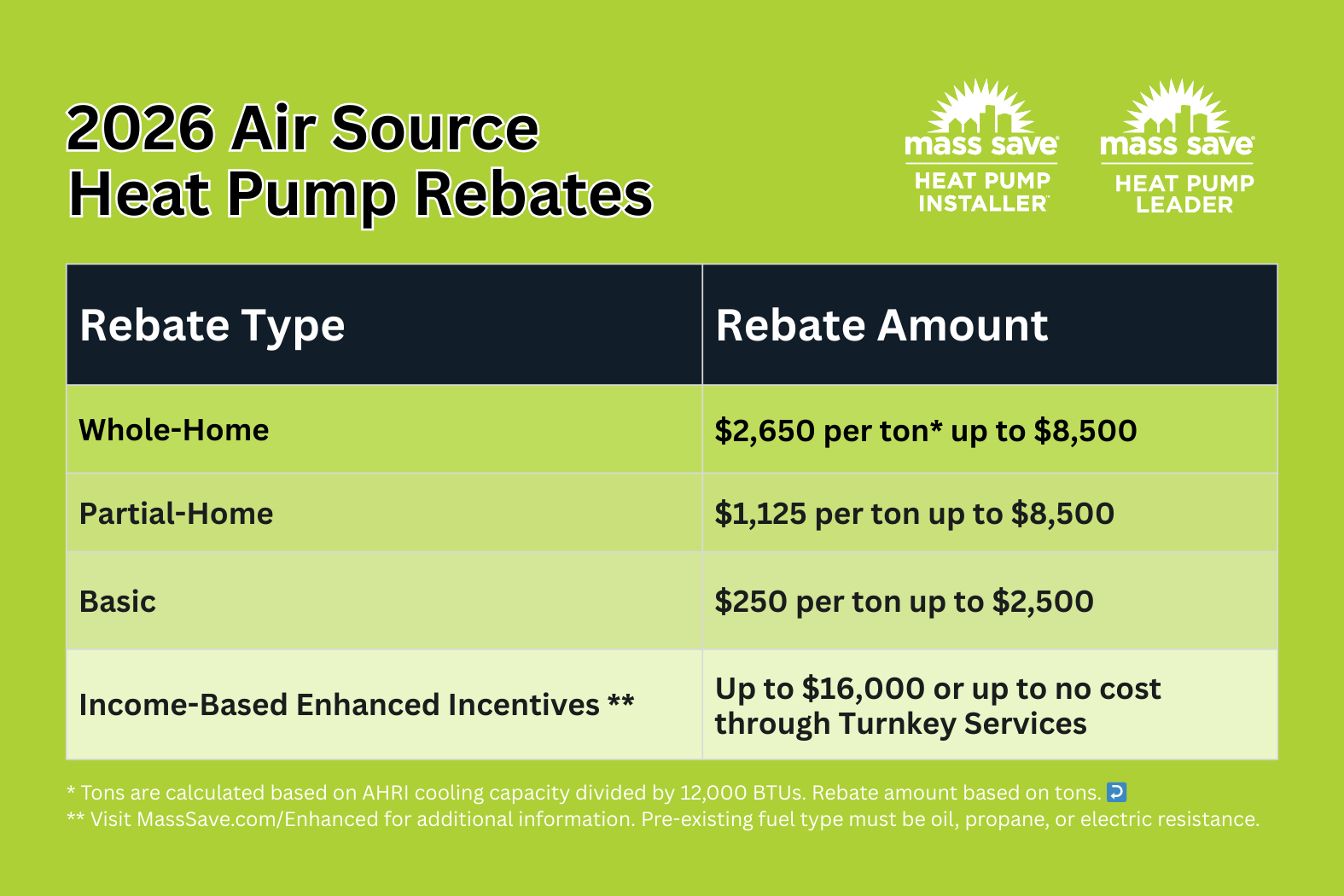
Mass Save has decreased its maximum rebate ceiling from $10,000 in 2025 to $8,500 in 2026. There are now three main paths for rebate eligibility, each with different per-ton amounts:
- Whole-Home Rebates: $2,650 per ton, up to $8,500
- Partial-Home Rebates: $1,125 per ton, capped at $8,500
- Basic Rebates: $250 per ton, with a maximum of $2,500
In addition, homeowners with qualifying incomes may be eligible for:
- Income-Based Enhanced Incentives: Up to $16,000 or even full system coverage through Turnkey Services
The eligibility pathway you choose impacts not only your rebate amount but also the type of installation required. Whole-home systems are often the best path for maximum savings and efficiency.
Reduced Rebates Mean Early Action Is Key
One of the most important takeaways for Hanson homeowners is that these rebates are being reduced over time—not increased.
If you received a quote based on 2025 figures, it’s vital to revisit your options now. A $1,500 reduction in maximum rebates can make all the difference in your return on investment. The earlier you act in 2026, the better prepared you'll be to take advantage of incentives before they are reduced again.
“Rebate deadlines and program changes can catch homeowners off-guard—residents in Hanson should consider upgrading sooner rather than later to lock in the best available savings."
What’s New in 2026: Refrigerants and System Requirements
Mass Save® rebate qualifications have gotten more specific in 2026—not just in terms of equipment efficiency, but also environmental impact. The refrigerant type used in your selected system now determines eligibility.
The End of R-410A System Incentives
Homeowners with quotes or older HVAC plans using R-410A refrigerants (previously an industry standard) should take note: these systems no longer qualify for Mass Save incentives in 2026.
Why is this happening? The environmental impact of refrigerants matters more than ever. R-410A has a high Global Warming Potential (GWP), and as part of Massachusetts’ push to reduce emissions, only systems with approved low-GWP refrigerants are now eligible for rebates.
If your system quote includes R-410A, it’s time to revisit options with a licensed professional installer.
Required System Efficiency Levels
To qualify for rebates, your air-source heat pump must also meet strict energy efficiency criteria:
- Heating Seasonal Performance Factor (HSPF2): Minimum level ensures solid cold-weather performance
- Seasonal Energy Efficiency Ratio (SEER2): Applies primarily in cooling season
- Integrated control installation: Particularly important for boiler/hybrid systems
This ensures that rebate dollars are promoting only high-performance technologies capable of delivering real energy savings throughout Massachusetts—including climate-challenged towns like Hanson.
Exploring the Types of Rebates for Hanson Homes
Your home's eligibility for Mass Save rebates depends on its size, current heating system, and your upgrade goals. Here’s how the different rebate types break down for homeowners in our region.
Whole-Home Rebate Strategy
Going all-in with a whole-home heat pump system can yield the highest possible rebate—up to $8,500 in 2026.
Key elements include:
- Complete replacement of your existing fossil fuel-based HVAC system
- Heat pump must be the sole source of heating and cooling
- Home energy assessment is required
- Ducted or ductless units accepted if they meet efficiency and refrigerant criteria
This is the best path forward for electric system conversions and long-term electrification.
Partial-Home and Basic Rebates
If you're not ready to replace your heating system entirely, there are other paths for rebates:
- Partial-Home Rebates: Used for supplemental heat pumps in older homes or homes retaining fossil fuel backups; capped at $8,500 total
- Basic Rebates: Minimum efficiency systems qualify, but payout is reduced to $250 per ton (max $2,500)
These options are popular in older colonial and Cape-style homes that are prevalent in Hanson, where retrofitting full systems may not always be immediately practical.
Income-Based Incentives in 2026
Hanson homeowners in qualifying income brackets may receive vastly increased assistance—including options that cover nearly the full cost of heat pump installation through Turnkey Services.
These enhanced incentives are tiered based on income, and designed to ensure that efficient energy solutions are accessible to all.
Highlights include:
- Up to $16,000 for full systems
- In many cases, zero out-of-pocket cost
- Must go through the community-based Turnkey delivery model
Local residents can check income thresholds and start the qualification process via the official Mass Save page.
Rebates Are Changing—But Heating Costs Remain High in Hanson
While rebates are trending downward, energy prices continue to rise across Massachusetts. For many families in Hanson, heat pumps still offer one of the most cost-effective and environmentally responsible paths forward—especially when paired with utility discount programs.
Utility Providers’ Reduced Rate Plans
Many electric utilities offer winter-time reduced rate programs for qualified heat pump systems. These discounts apply to electric usage tied to heat pump heating and can significantly reduce your bill during the coldest months.
Important details:
- Requires separate submeter installation
- Often paired with smart thermostat integration
- Must be discussed at time of planning to ensure compatibility
These utility-based approaches provide another layer of savings for households in Hanson that are committed to clean energy adoption.
Long-Term Value of Heat Pumps in Hanson Homes
Despite changes in rebate amounts, heat pumps continue to deliver:
- Heating and cooling in a single system
- Reduced carbon emissions
- Potential long-term energy bill savings
- Quiet, even comfort—often better than traditional forced air systems
“Heat pumps have transformed the way Massachusetts homeowners manage comfort—especially in climate zones like Hanson that experience both heating and cooling extremes.”
Federal Incentives in 2026: What’s Still Available?
As of 2026, the federal tax credit for heat pump installations is no longer available for Massachusetts homeowners. The expiration of these credits makes it even more important to assess state-level opportunities such as Mass Save before they diminish further.
Summary of changes:
- No federal tax credits in 2026
- Mass Save and income-based Turnkey Services remain the main incentive paths
- Strategic timing is essential to avoid missing out on current rebates
How Hanson Residents Can Get Started with Rebates
Knowing your home’s needs and eligibility is the first step. Here's a simplified checklist for Hanson homeowners:
- Schedule a no-cost Mass Save Home Energy Assessment
- Determine if a whole-home or partial-home setup makes sense
- Confirm refrigerant and efficiency ratings of your proposed system
- Review up-to-date rebate amounts and qualification dates
- Explore income-based incentive tiers
- Ask if your installer participates in Mass Save and Turnkey Programs
By acting now, Hanson residents can make smart, supported decisions about their home comfort and invest in a cleaner, more efficient future.
For additional rebate eligibility information and qualifying system specifications, consult Mass Save’s official resource on air-source heat pumps here.

What Local Homeowners Are Saying
See how SumZero has helped local homeowners stay comfortable year-round with energy-efficient heat pump solutions.


Not Sure Where to Start? We’ll Guide You
Let our experts design the right heating and cooling solution—customized for your comfort, your layout, and your energy goals. No pressure. Just clarity.
